
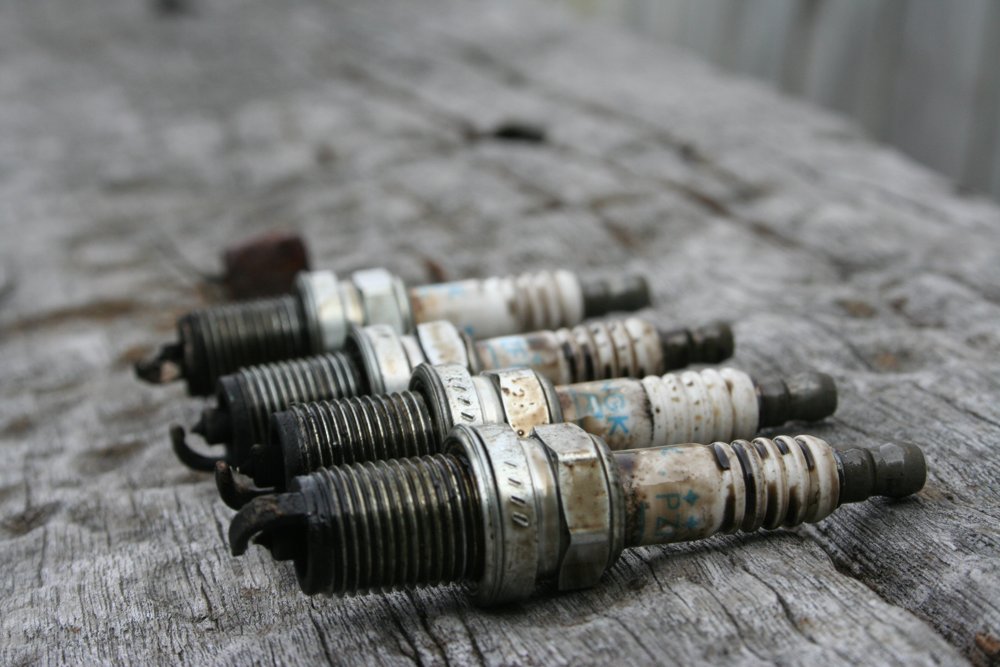
Spark plugs
Photo source: Aidan Wojtas · CC BY-SA 2.0Real reference photos only — not confirmed faults, repair instructions or verified fitment for your vehicle.
Steady vs flashing
A steady light usually means a non-urgent fault: the car can often be driven gently to a workshop soon. A flashing light signals an active misfire that can quickly damage the catalytic converter—reduce speed, avoid load, and stop safely as soon as you can.
A red oil-pressure or temperature warning is different from the amber engine light: those mean stop the engine immediately, not ‘drive on and check later’.
Common causes
Frequent triggers include a loose or missing fuel cap, faulty oxygen or airflow sensors, ignition coils or spark plugs, and emissions-system faults. Many are inexpensive to fix, but the light alone cannot tell you which one you have.
Avoid guessing fault codes or buying parts based on the light alone. A code readout points to a circuit or system; a mechanic still needs to test whether the sensor, wiring or component is actually at fault.
Practical next steps
Note when the light appeared, any changes in power, fuel use, sounds or smells, and whether it is steady or flashing. Check the fuel cap is tight. Then book a diagnosis—many workshops and parts stores can read codes, but a proper diagnosis goes further than the code.
Use Tow2 to describe the symptoms alongside the light; the report can help you ask informed questions, but it does not replace reading the actual fault codes from your vehicle.