
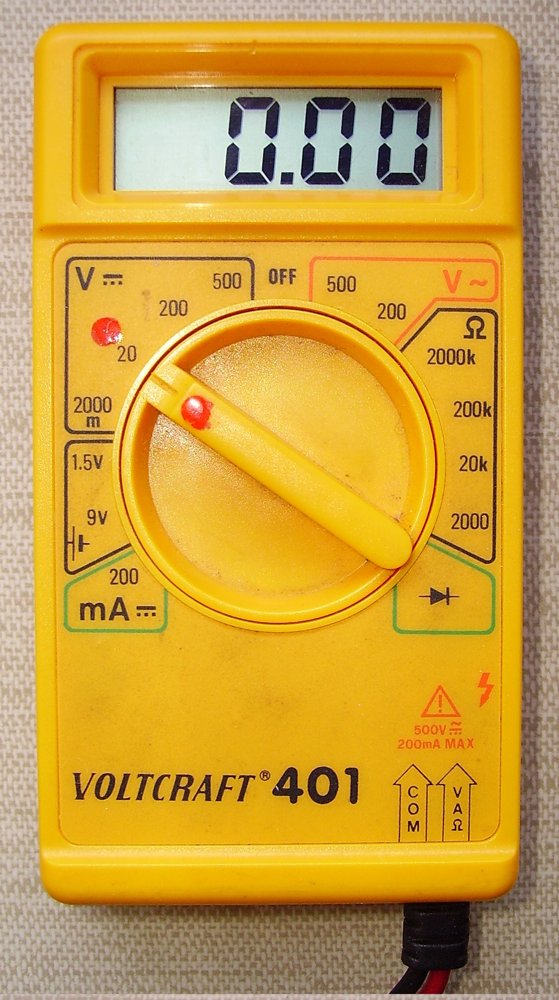
Multimeter
Photo source: Cjp24 · CC BY-SA 3.0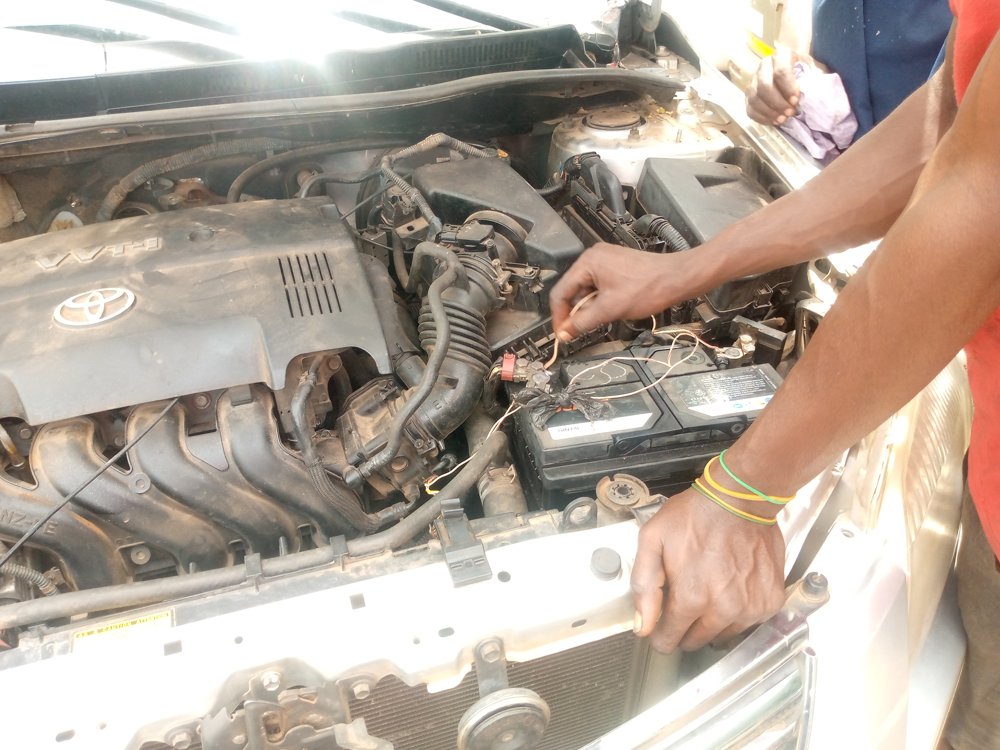
Car battery
Photo source: Azorbli · CC BY-SA 4.0Real reference photos only — not confirmed faults, repair instructions or verified fitment for your vehicle.
Battery or alternator?
A weak battery typically causes slow cranking and starting trouble after the car has sat, especially in cold weather. A failing alternator more often shows up while driving: dimming or flickering lights, a battery warning light on the dashboard, electrical accessories behaving oddly, or a battery that keeps dying despite being new.
A battery warning light means the charging system is not working correctly—it usually indicates the alternator or its drive belt, not the battery itself. If that light comes on while driving, switch off unnecessary electrical loads and head somewhere safe; the car is running on battery alone and will stop when it drains.
Simple checks
With the engine off, a healthy, rested battery typically reads around 12.6 volts on a multimeter; with the engine running, the charging system should show roughly 13.5–14.5 volts at the battery. Readings far outside these ranges suggest a problem, but a proper load test at a workshop or battery service is more conclusive.
You can also look at the drive belt for cracks or looseness and check battery terminals for corrosion. Do not disconnect the battery while the engine runs, and avoid touching both terminals with tools or jewelry.
Replacing the right part
Batteries differ in size, terminal layout, capacity and technology; alternators differ in output and mounting. Use your vehicle details—and ideally the old part’s label or number—when buying, and confirm fitment with the supplier. A VIN lookup describes your vehicle but does not by itself confirm part compatibility.
If a new battery dies again within days, the alternator, wiring or a parasitic drain is likely at fault. Ask the workshop to test the whole charging system rather than swapping parts one by one.