
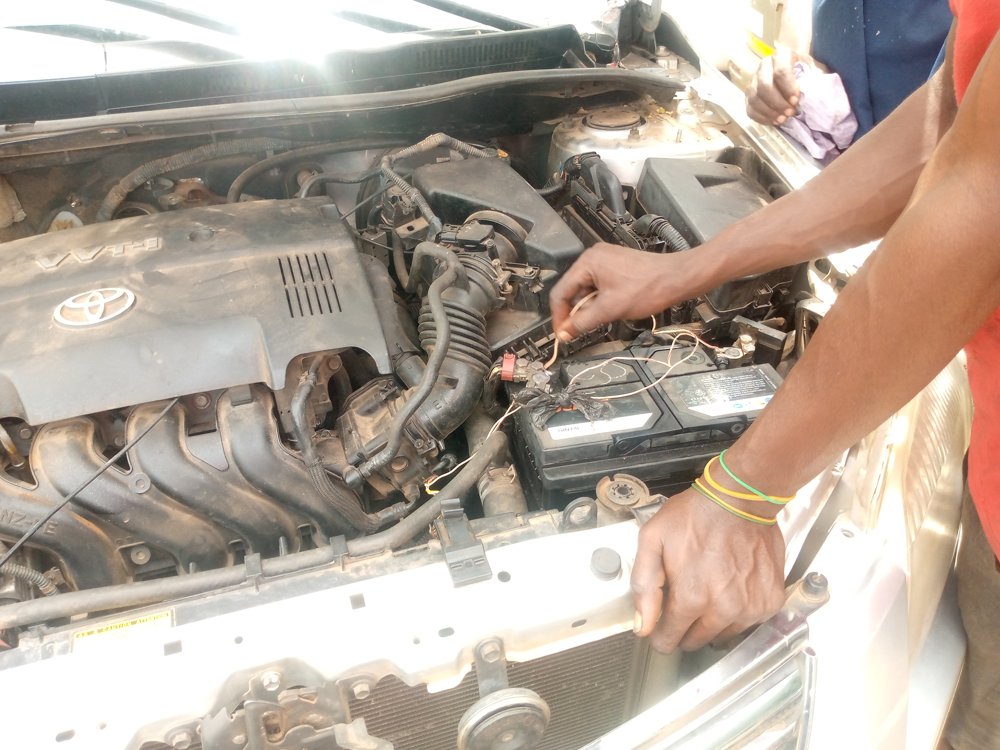
Car battery
Photo source: Azorbli · CC BY-SA 4.0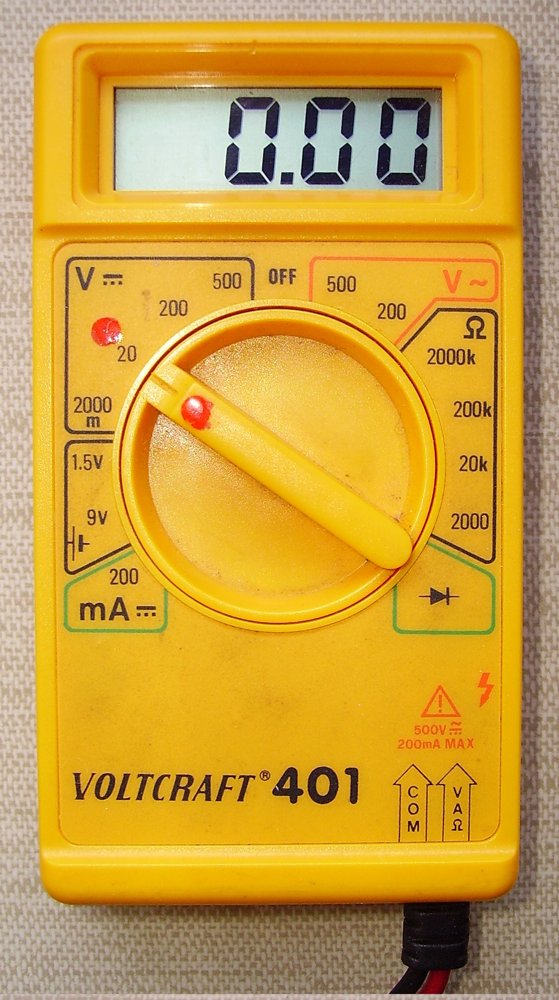
Multimeter
Photo source: Cjp24 · CC BY-SA 3.0Real reference photos only — not confirmed faults, repair instructions or verified fitment for your vehicle.
Reading the symptoms
Rapid clicking with dim lights usually points to a weak battery. A single loud click with bright lights can indicate a faulty starter motor or its wiring. Normal cranking without firing suggests fuel, ignition or sensor issues rather than the battery.
Silence with no dashboard lights often means a very flat battery, a disconnected or corroded terminal, or a failed main fuse. If the immobilizer or security light flashes unusually, the key or immobilizer system may be the issue.
Safe checks you can do
Check that the car is in Park or Neutral, the fuel gauge is not empty, and the battery terminals are tight and free of heavy corrosion. Note whether dashboard lights are bright or dim. A jump-start can confirm a weak battery, but follow the vehicle manual’s procedure and never jump-start a damaged, leaking or frozen battery.
Do not keep cranking for more than a few seconds at a time; it overheats the starter and can flood the engine. If a jump-start works, drive to have the battery and charging system tested rather than assuming the problem is solved.
When to get help
If a jump-start does not help, the terminals are damaged, or the car starts then stalls repeatedly, it is time for a mechanic. A workshop can load-test the battery, test the starter and alternator, and check fuel and ignition systems properly.
Stranded somewhere unsafe? Prioritize your location over the repair: move to a safe spot if possible, switch on hazard lights, and use Tow2 to find nearby battery services or a tow truck.